Cesium Supply Brief
One Chinese company holds most of the world's cesium
It runs the atomic clocks in GPS satellites and aircraft guidance systems.[1]
Here is the setup, and where our Ontario ground sits.
If you want exposure to cesium, the question is not whether it is scarce. It is where a Western supply could come from at all.
Our answer is White Willow, a lithium-cesium-tantalum pegmatite property near Atikokan in northwestern Ontario. LCT pegmatites are the setting in which pollucite occurs.[2]
Three things about this supply chain
Cesium is on the United States critical minerals list.[3] What sits behind that listing is thinner than the words "supply chain" suggest.
One mine reports production, and it runs intermittently. Through 2025 a single company in Canada reported intermittent cesium production and processing, drawn from mined ore and from stockpiles at the Tanco Mine. Recovery from tailings at the Bikita Mine in Zimbabwe restarted in recent years, for shipment to China.[1]
Nobody can audit it. There are no official sources for cesium production data. Consumption, import and export figures for the United States have not been available since the late 1980s, and because cesium metal is not traded in commercial quantities there is no market price.[1]
Engineers are designing around it. Owing to the lack of global availability of cesium, many applications have moved to mineral substitutes, and the use of primary cesium in some applications may no longer be viable.[1]
Sent immediately
The cesium white paper
Where the supply actually sits, who controls it, and what the numbers are. Sent immediately when you subscribe.
One
The ownership is about as concentrated as it gets
Cesium is recovered almost entirely from pollucite, a mineral found in rare element pegmatites. The United States has been 100 percent import reliant for cesium minerals, and no cesium was mined domestically in 2025.[1]
Two operations have supplied the West. The Tanco mine at Bernic Lake in Manitoba works from stockpiles, and Bikita in Zimbabwe recovers cesium from tailings.[1] Sinomine Resource Group, a Chinese group, acquired the Tanco operation and the cesium formate specialty fluids business, and subsequently acquired Bikita.[4]
The practical result is that a single Chinese owner sits across the majority of identified global pollucite supply and the downstream fluids business built on it, while Western consumers of cesium have almost no independent alternative.[4][1]
Pollucite occurrences have been identified in Australia, Canada, Namibia, the United States and Zimbabwe, and cesium is also recovered as a byproduct of lithium and rubidium operations. Concentration of ownership is not the same as the absence of geology elsewhere.[1]
Who actually produces it
Primary global producers of cesium, as estimated by the USGS
 Canada
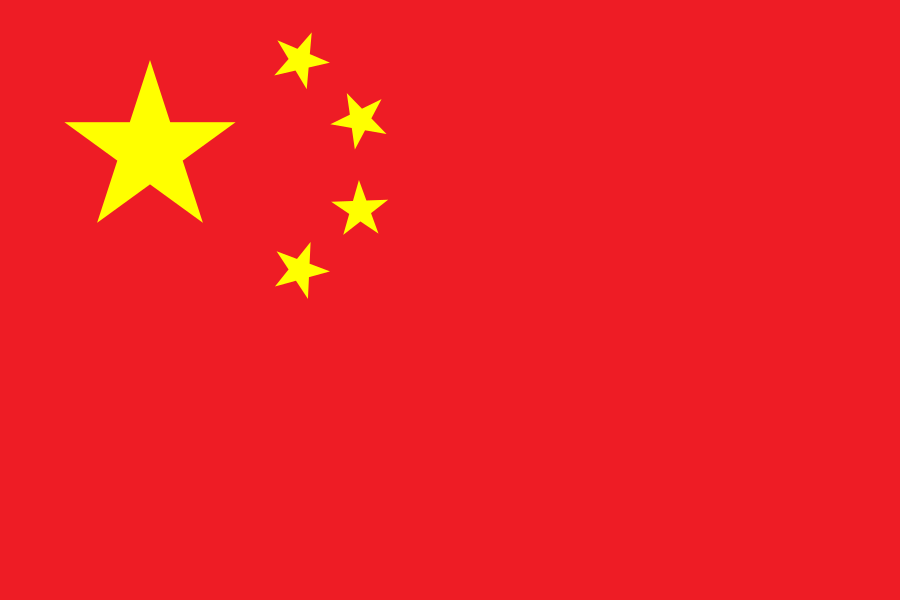 China
China Germany
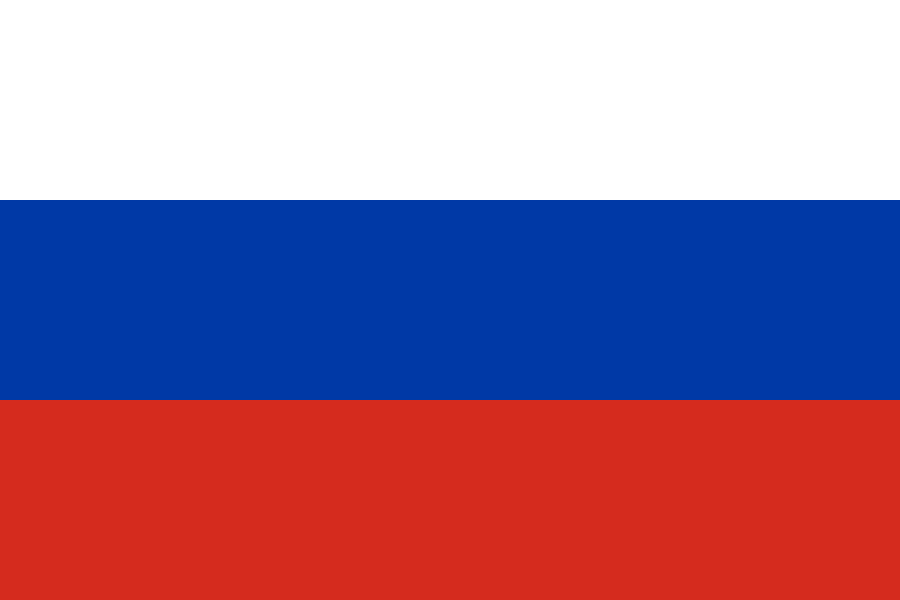 Russia
Source[1]
Two
What we hold
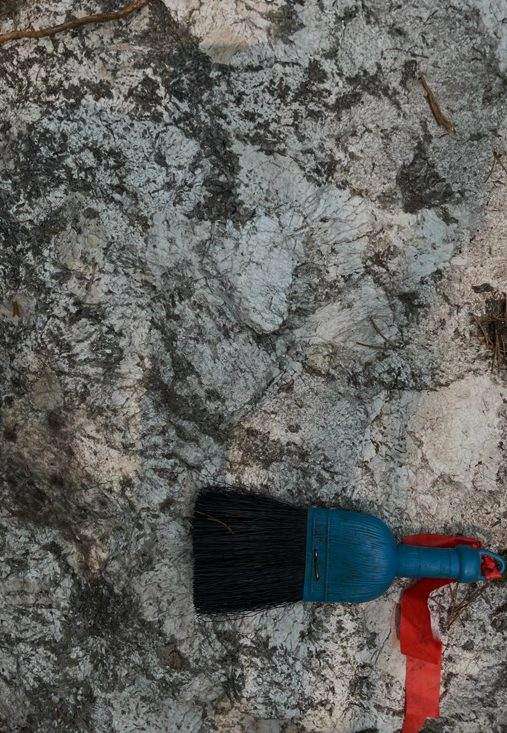
White Willow is a lithium-cesium-tantalum (LCT) pegmatite property in the Thunder Bay South Mining District of Ontario, a stable North American jurisdiction with year-round road access.[2]
LCT pegmatites are the geological setting in which pollucite occurs. That is the reason the property is relevant to this story.
No mineral resource has been defined at White Willow. Results from prior operators are historical and not verified by Totec.[2]
Investor deck
Get the investor deck
White Willow, the capital structure, and what happens next.
Why we keep coming back to it
A metal on two nations' critical minerals lists, recovered from a single mineral, with the majority of identified supply and the business built on it under one Chinese owner, and no domestic United States production at all in 2025. Set beside that, an early stage LCT pegmatite property on allied ground in Ontario, with the drill as the next step.[1][4][2]
One half is a structural concentration the West is trying to source around. The other is ground at an early stage of exploration, with the work ahead of it, not behind it.
We're not going to tell you what to do with that.
We'll just say the ground is filed, funded and road accessible, and the drill is the next line in the file.
Read the full cesium briefing, or the White Willow project page. Subscribe below and we will send our news releases when we announce them. Review our continuous disclosure on SEDAR+.
Common Questions
Frequently asked
What is cesium used for?
The largest single use is cesium formate brine, a dense, low-solids drilling and completion fluid used in high-pressure, high-temperature oil and gas wells. Cesium is also central to atomic clocks, where the caesium-133 transition defined the SI second, and it is used in photoelectric cells, specialty optical glass and certain catalysts.
Why is cesium so rare?
Cesium has no dedicated deposit type of its own. It concentrates only at the very end of the fractionation sequence in LCT pegmatites, and it is economically recovered from essentially one ore mineral, pollucite. Very few pegmatites in the world evolved far enough to form pollucite in quantity.
What is pollucite?
Pollucite is a hydrated cesium aluminium silicate and the only ore mineral from which cesium is recovered at commercial scale. It forms in the most evolved zones of LCT pegmatites, which is why cesium mineralization is treated as an indicator that a pegmatite system is highly fractionated.
Where does the world's cesium come from?
Supply is extraordinarily concentrated. The U.S. Geological Survey reports that no cesium was mined in the United States in 2025, that the country was 100% net import reliant for cesium minerals, and that during 2025 one company in Canada reported intermittent cesium production and processing from mined ore and stockpiles at the Tanco Mine in Manitoba. Worldwide, pollucite production sits with a very small number of operations.
Is cesium a critical mineral?
Yes. Cesium appears on both Canada's Critical Minerals List and the United States critical minerals list, reflecting the combination of industrial necessity and concentrated, insecure supply.
Investor updates
Get the next update on this ground
If the cesium story is worth watching, the fastest way to follow it is by email. You can also speak to the CEO directly.
Prefer to talk? +1 (778) 899-1780 or deepak@totecresources.com
Sources
References
Every numbered claim on this page is attributed to the source it came from.
- pubs.usgs.gov Mineral Commodity Summaries 2026, Cesium, U.S. Geological Survey
- sedarplus.ca NI 43-101 Technical Report on the White Willow Property, Thunder Bay South Mining District, Ontario, filed on SEDAR+
- federalregister.gov Final 2025 List of Critical Minerals, U.S. Geological Survey, 90 FR 50494, November 7, 2025
- sinomine.com.cn Publicly reported corporate transactions of Sinomine Resource Group, including the acquisition of the Tanco and Bikita operations
Sources are named to identify where the information came from. Their inclusion does not indicate any affiliation with, sponsorship of, or endorsement of Totec Resources Ltd. by the organisations cited, or by the Government of the United States. Third-party statements describe the metal and its supply chain. They are not statements about Totec Resources Ltd. or the White Willow Property, and no inference should be drawn from them as to the presence, grade or economic viability of any mineralization on the Property.
Published by Totec Resources Ltd. This page is investor relations material issued by and on behalf of the Company. It is not independent editorial or third-party research.
Market and macro information on this page describes general supply and ownership conditions for cesium and is drawn from third-party sources. It is provided for education and industry context only. It is not a forecast of prices, not a forecast of Totec Resources' results, and not investment advice.
Totec Resources has no mineral resource estimate and no mineral reserve estimate on the White Willow Property. Exploration is at an early stage and carries a high degree of risk. Nothing on this page should be read as a statement that mineralization of economic value has been identified on the property.
The scientific and technical information on this page has been reviewed and approved by Deepak Varshney, P.Geo, CEO and Director of Totec Resources, a Qualified Person as defined by National Instrument 43-101.
This page contains forward-looking statements regarding Totec Resources Ltd. and its exploration plans. Forward-looking statements involve known and unknown risks and uncertainties, and actual results may differ materially. Readers should not place undue reliance on forward-looking information. Totec undertakes no obligation to update forward-looking information except as required by law.
Nothing on this page is an offer to sell or a solicitation of an offer to buy any security. Investing in the securities of mineral exploration companies is speculative and carries a high degree of risk. Review the Company's continuous disclosure record on SEDAR+ and consult a licensed investment advisor before making any investment decision.