Flagship Project | Ontario, Canada
White Willow
An LCT pegmatite system 8 km southeast of Atikokan and 185 km west of Thunder Bay, in the Thunder Bay South Mining District.
Geology
Highly fractionated LCT pegmatites
White Willow lies within the Quetico Terrane of the Superior Province, a metasedimentary belt intruded by S-type granites. Along its northern boundary these granites give rise to LCT (lithium-cesium-tantalum) pegmatites carrying the classic fractionation signature of a fertile pegmatite field.[1]
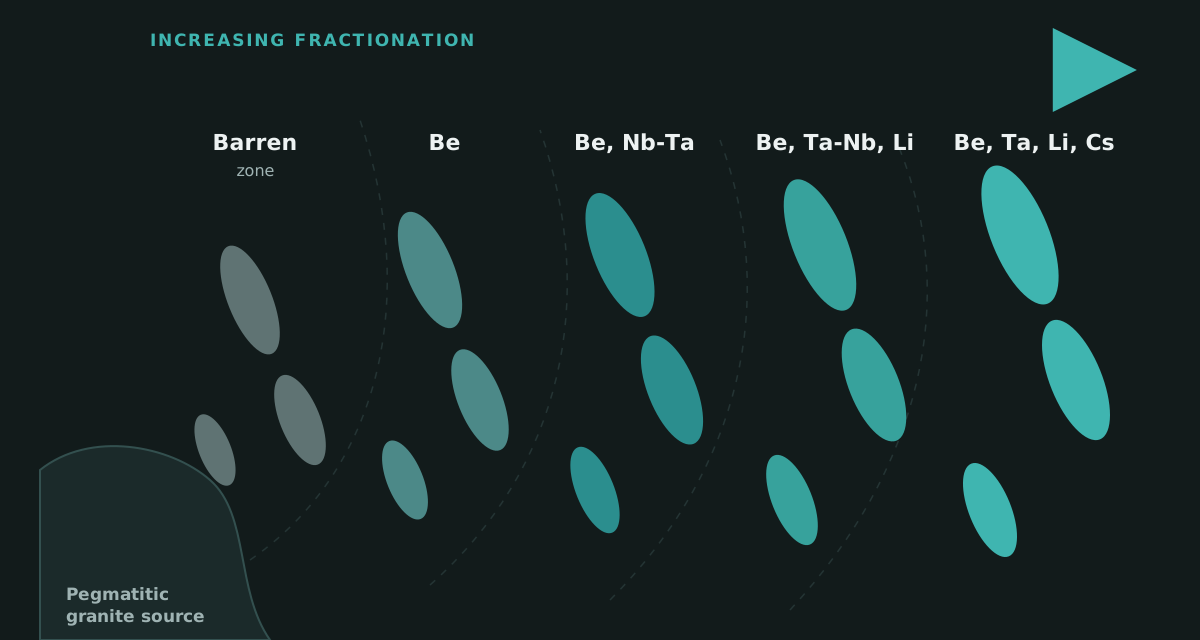
In a fertile system, pegmatite dikes become progressively more chemically evolved with distance from their parent granite. The barren zone nearest the source gives way outward to beryllium, then niobium-tantalum, then lithium and finally cesium enrichment. The presence of beryl, tantalum and cesium minerals at White Willow places its pegmatites at the highly fractionated, most prospective end of that sequence.[1]
The Fractionation Sequence
How a pegmatite field tells you where to look
Pegmatite dikes become progressively more chemically evolved with distance from the granite that produced them. Each zone carries a different metal signature. Reading that sequence is how an explorer decides which part of a field is worth drilling. Scroll to walk the sequence outward from the source.[1]
-
Zone 1
Barren
Closest to the parent granite. The melt has not yet concentrated the rare elements, so these dikes carry little of economic interest. Finding only this zone tells you the fertile part of the system lies further out.
-
Zone 2
Beryllium
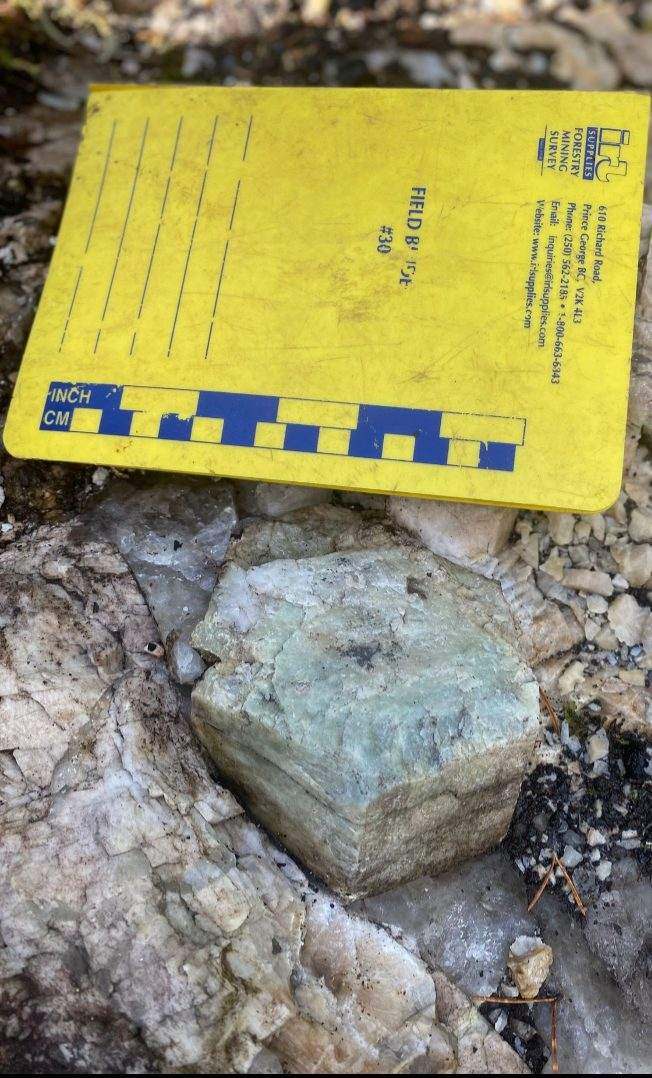
The first rare-element zone. Beryl appears as the melt begins to concentrate incompatible elements. At White Willow, beryl has been observed in the pegmatites, with crystals reported up to 11 cm.[3]
-
Zone 3
Niobium and tantalum
Further out, columbite and tantalite crystallise. The ratio between the two matters: a low Nb/Ta ratio means the system has evolved far enough to favour tantalum. White Willow returns Nb/Ta below 0.5.[1]
-
Zone 4
Lithium
Spodumene-bearing dikes mark a strongly fractionated system. The largest outcrop mapped at Maple Leaf, roughly 350 m by 70 m, is spodumene-bearing.[3]
-
Zone 5
Cesium
The most evolved zone of all, and the rarest. Cesium enrichment sits at the far end of the sequence. Its presence alongside beryl and tantalite is what places the White Willow pegmatites at the highly fractionated, most prospective end of the model.[1]
Generalized exploration model for LCT pegmatites. Source[2]
Reading the Rock
How a geologist knows a pegmatite is worth chasing
The individual metals at White Willow are covered on their own pages. What follows is the method behind all of them, because the same few ratios decide whether a pegmatite field is worth the next dollar.
Fractionation is the whole game
A pegmatite forms from the last, most stubborn fraction of a granite melt. As that melt cools and moves away from its parent granite, the elements that do not fit neatly into ordinary minerals get concentrated in what is left. Lithium, cesium, tantalum and rubidium are exactly those misfits. The further a melt has evolved, the more of them it carries.
So the question is never simply how much lithium is in a rock. It is how far the system has evolved, because that is what predicts where the good ground lies.
Muscovite is the gauge
Muscovite mica takes lithium, cesium and rubidium into its structure in proportion to how evolved the melt was when it crystallised. That makes it a far better indicator than a headline grab sample, which is selective by nature and reflects wherever the sampler chose to swing the hammer. Muscovite chemistry describes the system. A grab sample describes one rock.[4]
Two ratios do most of the work
The potassium to rubidium ratio falls as a melt fractionates, because rubidium progressively displaces potassium in the mineral structure. A low K/Rb is the signature of an evolved system.
The niobium to tantalum ratio behaves the same way. Niobium and tantalum travel together, and tantalum concentrates later, so a falling Nb/Ta ratio points to a system that has run further down the sequence. Both ratios are standard tools in rare-element pegmatite exploration, and both are discussed in the filed technical report.[4]
The sequence tells you where to look
Enrichment tends to arrive in order, running from beryllium through niobium and tantalum to lithium and cesium. That is why cesium values are read as a maturity indicator for the whole field rather than as a target in their own right, and why beryl in outcrop is treated as an early sign that the system is fertile.
Source[4]
Maple Leaf Showing
A large, spodumene-bearing pegmatite trend
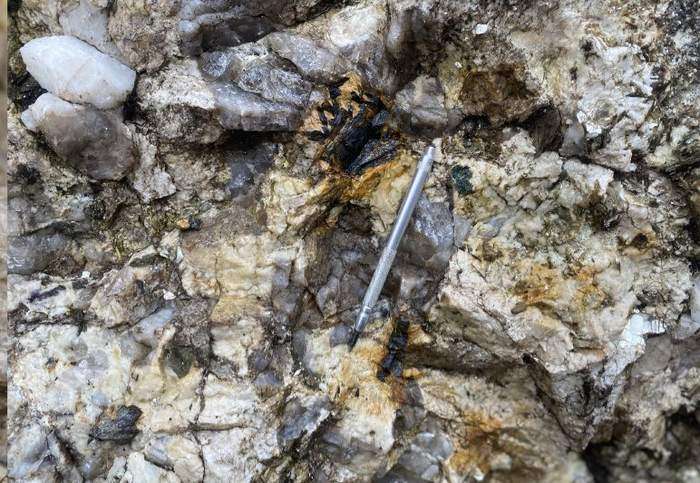
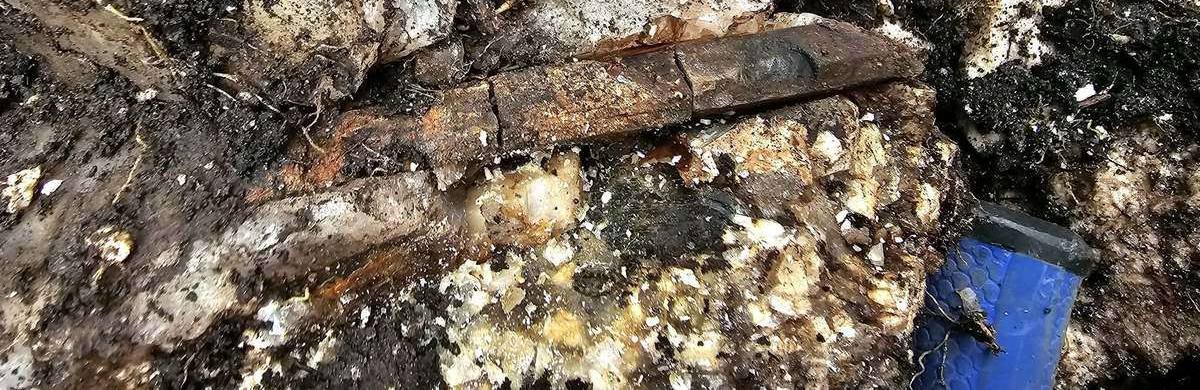
The Maple Leaf showing defines a pegmatite trend roughly 8 km long and 1 km wide, of which about 3 km has been mapped in detail. Surface work has confirmed 47 LCT pegmatites carrying spodumene, beryl and coarse tantalite.
Confirmed LCT pegmatites across the mapped trend.[1]
Ta2O5 in coarse tantalite from a selective surface grab sample.[3]
Pegmatite trend, with ~3 km mapped in detail.[1]
Scale and mineralogy
The largest outcrop mapped to date measures roughly 350 m by 70 m and is spodumene-bearing. Across the showing, coarse crystal growth points to a well-developed, evolved system, with beryl crystals up to 11 cm and K-feldspar to 100 cm.[3]
Surface geochemistry
Grab and channel sampling has returned a consistent lithium-cesium-tantalum tenor across the showing, indicating the fertility of the pegmatite field.[3]
Property Map
One land package on the highway
From the Field
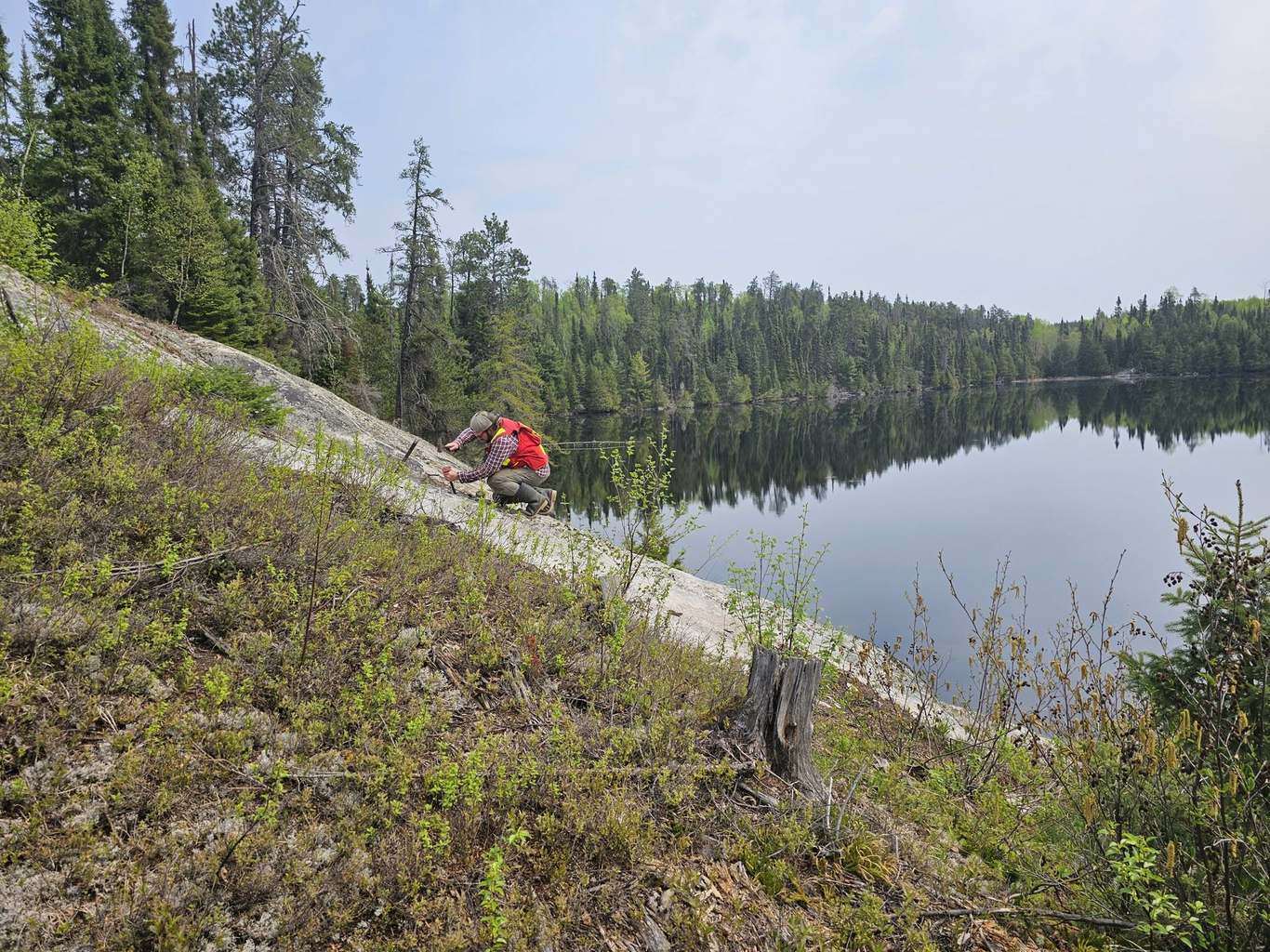
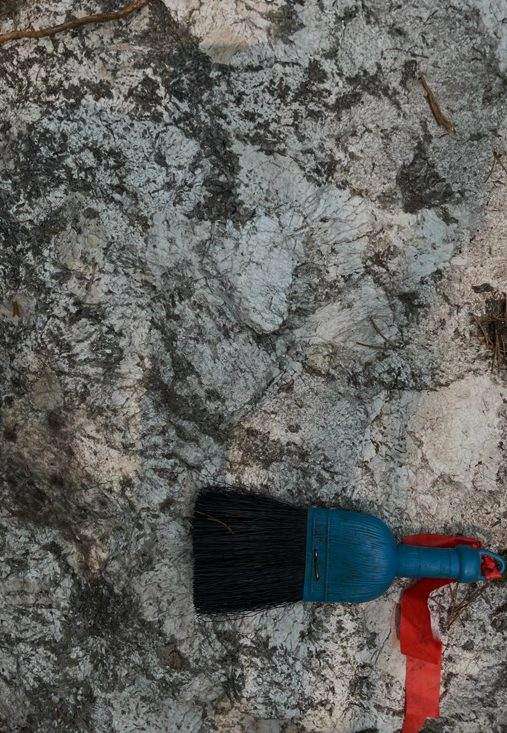
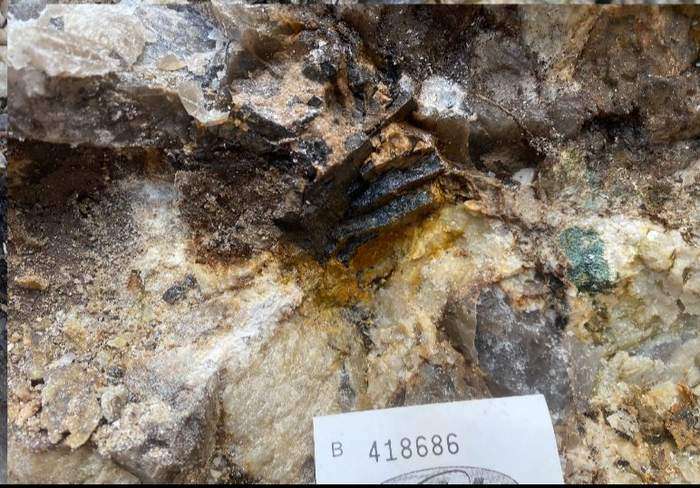
White Willow on the ground
The Road Ahead
A disciplined exploration approach
Totec's approach at White Willow is to build the geological picture methodically, letting each stage of surface work sharpen the targets that follow before any subsurface testing is considered.
-
Systematic mapping
Extend detailed geological mapping across the Maple Leaf trend and the wider land package to define the full extent and orientation of the pegmatite swarm.
-
Prospecting and sampling
Follow up the strongest lithium, cesium and tantalum responses with continued grab and channel sampling to confirm grade tenor and fractionation trends.
-
Geophysics
Apply geophysical surveys to trace pegmatite bodies under cover and test whether separate outcrops connect at depth.
-
Target definition
Integrate mapping, geochemistry and geophysics to prioritise the most prospective zones ahead of any future subsurface targeting.
The scientific and technical information on this page has been reviewed and approved by Deepak Varshney, P.Geo, CEO and Director of Totec Resources, a Qualified Person as defined by National Instrument 43-101.
Historical results referenced from the 2022 Surface Prospecting Report filed for assessment (AFRI 20000022099).
This page contains forward-looking statements regarding Totec Resources Ltd. and its exploration plans. Actual results may differ materially, and readers should not place undue reliance on forward-looking information.
Get the next update
Get the next update on this ground
If the White Willow story is worth watching, the fastest way to follow it is by email. You can also speak to the CEO directly.
Sources
References
Every numbered claim on this page is attributed to the source it came from.
- totecresources.com Totec Resources Ltd., Corporate Presentation, August 2026
- pubs.usgs.gov Mineral Commodity Summaries 2026, U.S. Geological Survey, March 2026
- geologyontario.mndm.gov.on.ca 2022 Surface Prospecting Report, White Willow Property, Grid Metals Corp, assessment file AFRI 20000022099
- sedarplus.ca NI 43-101 Technical Report on the White Willow Property, Thunder Bay South Mining District, Ontario, filed on SEDAR+
- sedarplus.ca Totec Resources Ltd., Management Discussion and Analysis for the nine months ended December 31, 2025, filed on SEDAR+
- totecresources.com Totec Resources Approved for Listing on OTCQB Venture Market, news release dated May 27, 2026
Sources are named to identify where the information came from. Their inclusion does not indicate any affiliation with, sponsorship of, or endorsement of Totec Resources Ltd. by the organisations cited, or by the Government of the United States. Third-party statements describe the metal and its supply chain. They are not statements about Totec Resources Ltd. or the White Willow Property, and no inference should be drawn from them as to the presence, grade or economic viability of any mineralization on the Property.